
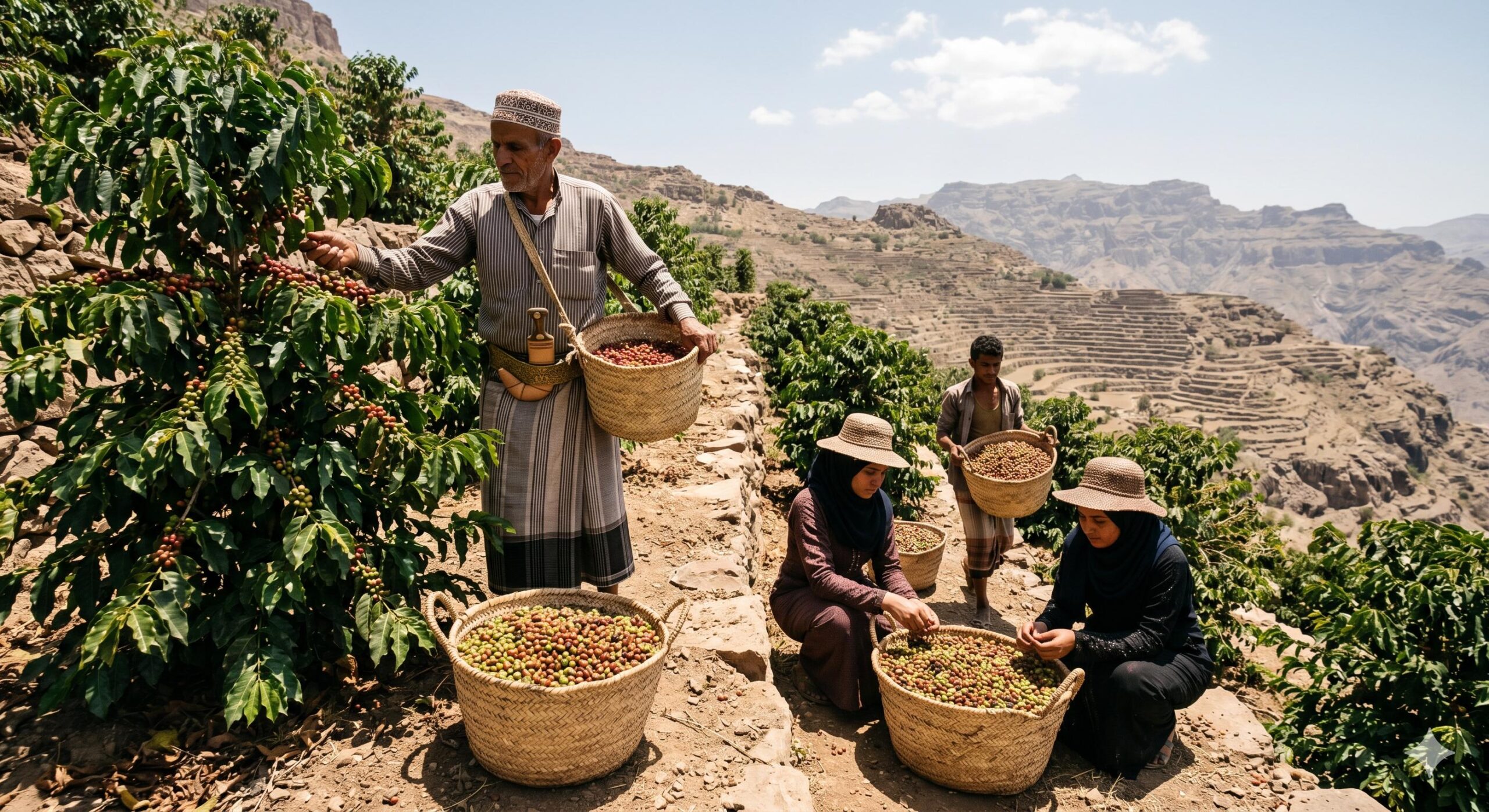
The origins of Yemen's coffee tradition
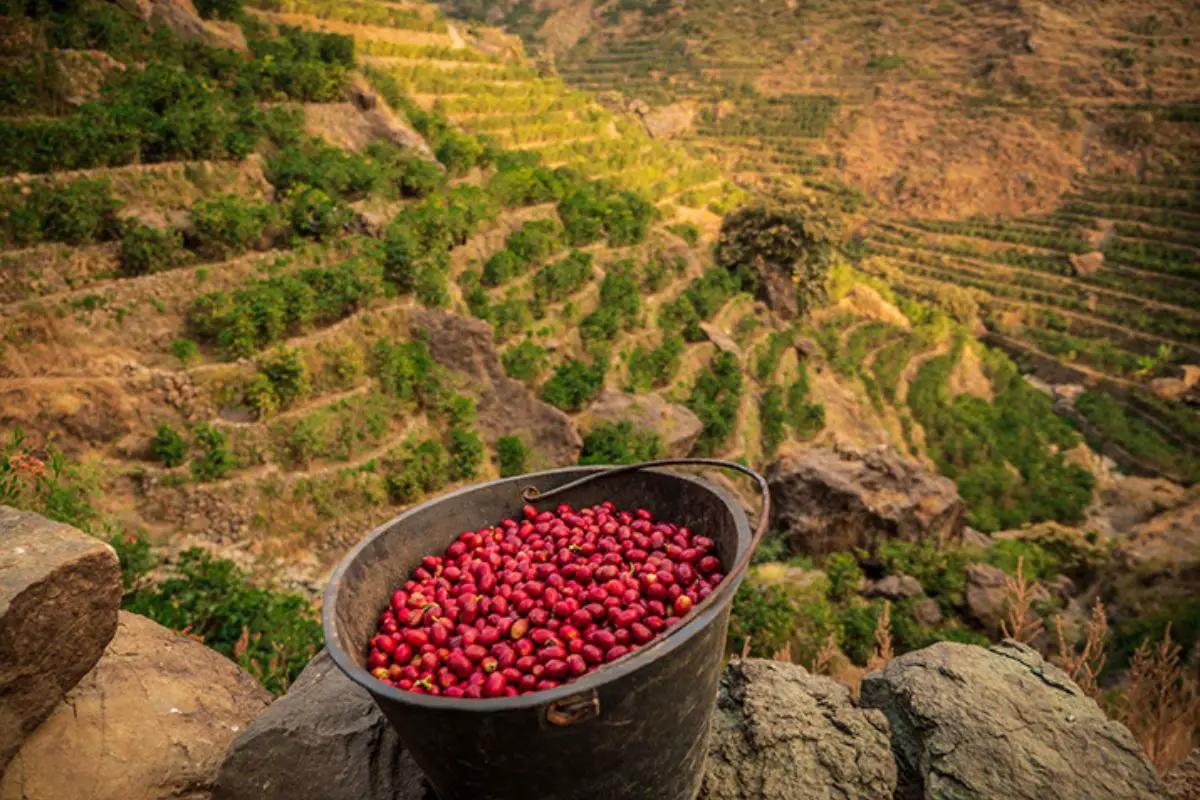
Yemen became one of the earliest major centres of coffee cultivation and commercial trade. Although coffee plants originated in Africa, particularly Ethiopia, Yemen played a crucial role in establishing coffee as a cultivated crop and spreading its use across the wider world. - Mountain cultivation: Coffee has been grown for centuries in Yemen's highlands, where farmers work on steep terraces and rely on seasonal rainfall. - Historic trade: Yemeni coffee travelled from Red Sea ports to markets across the Middle East, Europe, and beyond. - Cultural identity: Traditional farming and coffee preparation remain important expressions of Yemeni heritage.
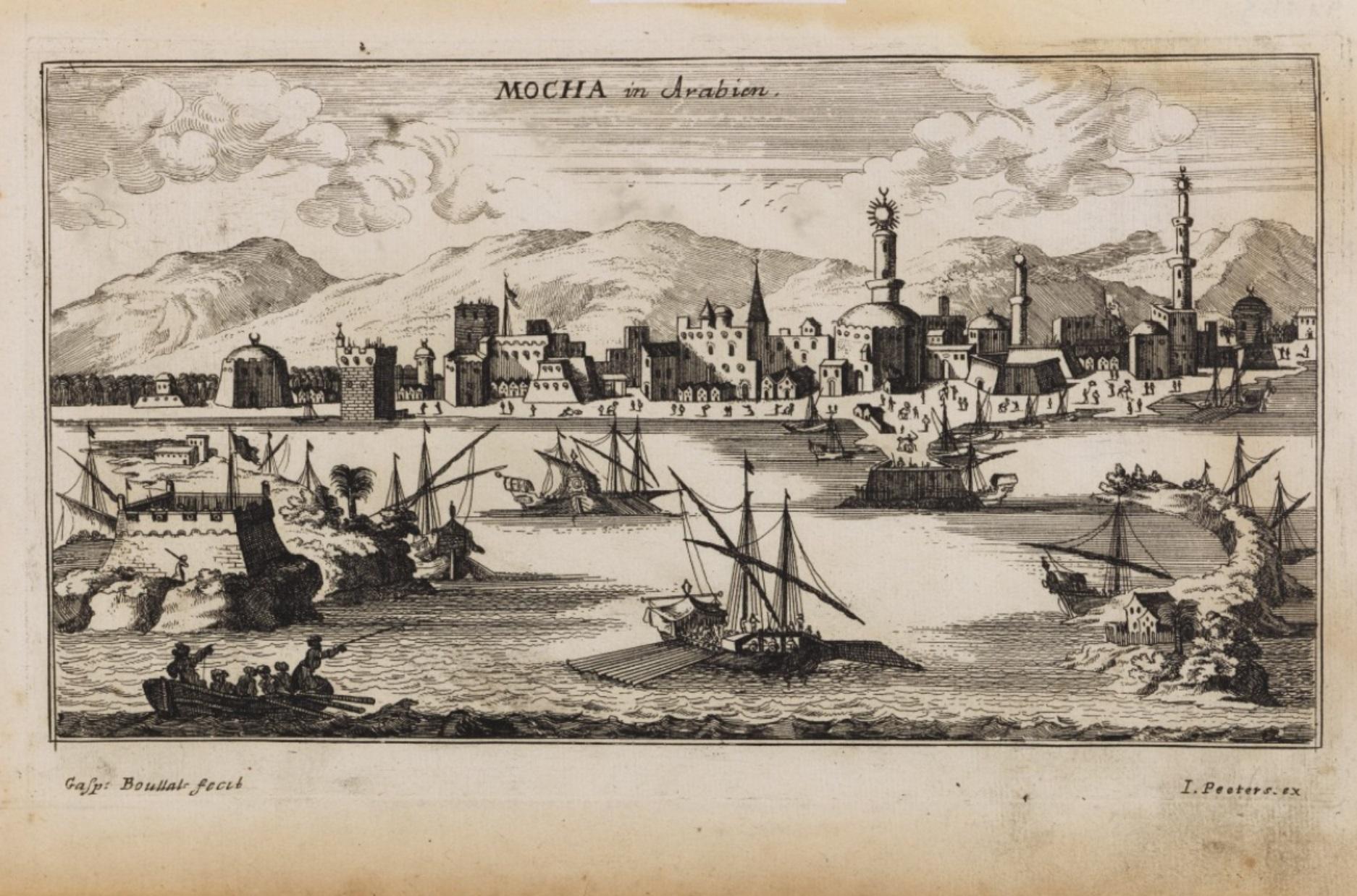
Mocha — Yemen's legendary coffee port
Al-Mokha (Mocha) The historic port of Mocha, on Yemen's Red Sea coast, became internationally famous for exporting coffee. Its name eventually became associated with coffee itself and helped inspire the modern term mocha. For centuries, merchants carried Yemeni coffee through Red Sea and Indian Ocean trading networks, helping introduce it to distant markets. The port remains a powerful symbol of Yemen's contribution to global coffee culture.
Traditional Yemeni coffee-growing regions
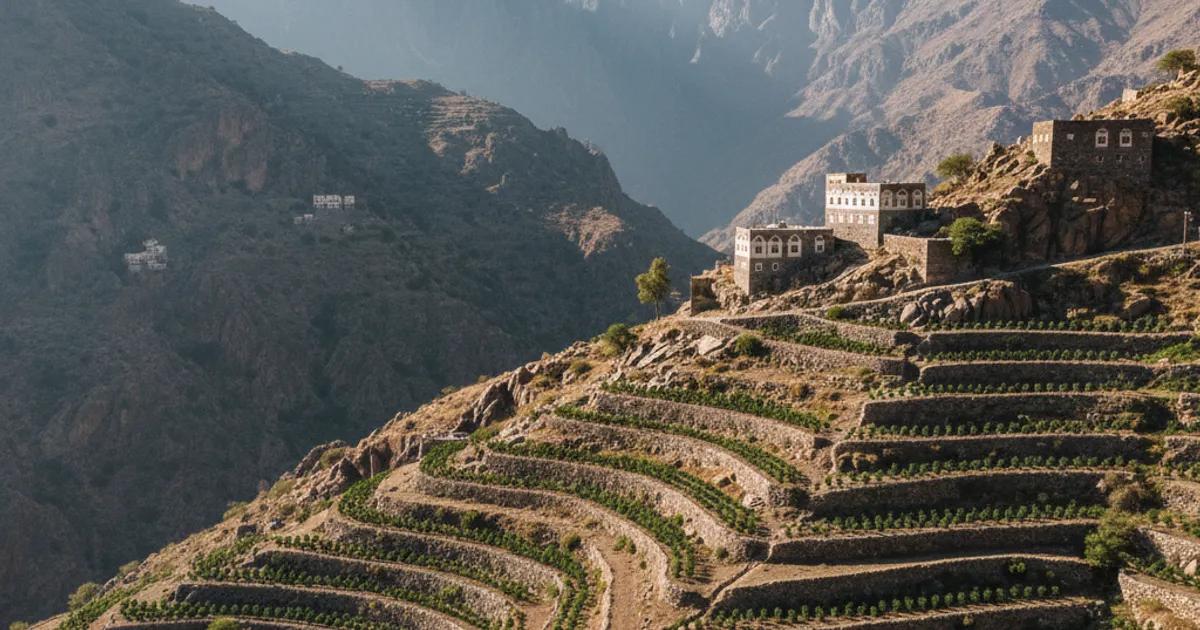
Haraz — حراز
A famous highland coffee-growing area known for steep terraces, mountain villages, and traditional farming. Harazi coffee is prized by specialty coffee enthusiasts.
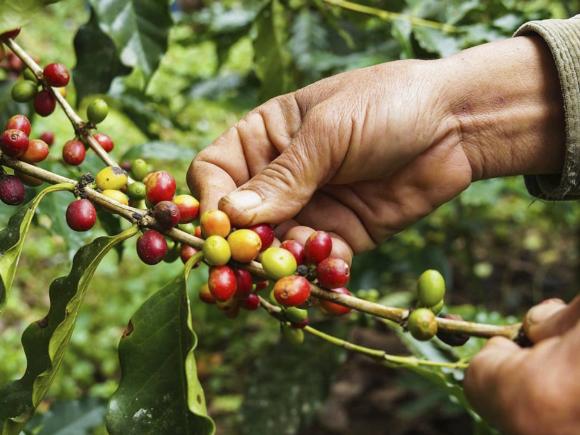
Bani Matar — بني مطر
A western highland region associated with Sanani coffee and traditional cultivation of Arabica coffee on mountain slopes.
Yafa — يافع
A historic southern highland coffee region with distinctive local farming traditions and regional coffee varieties.
